
Map
Wanderer's
The
Follow Along
Sign Up
Stay Updated
A purpose-driven, emotionally grounded creator who helps people feel seen and empowered as they navigate life’s most uncertain and transformative moments.

Hi, I'm Amanda!
Sharing wisdom, one story at a time.
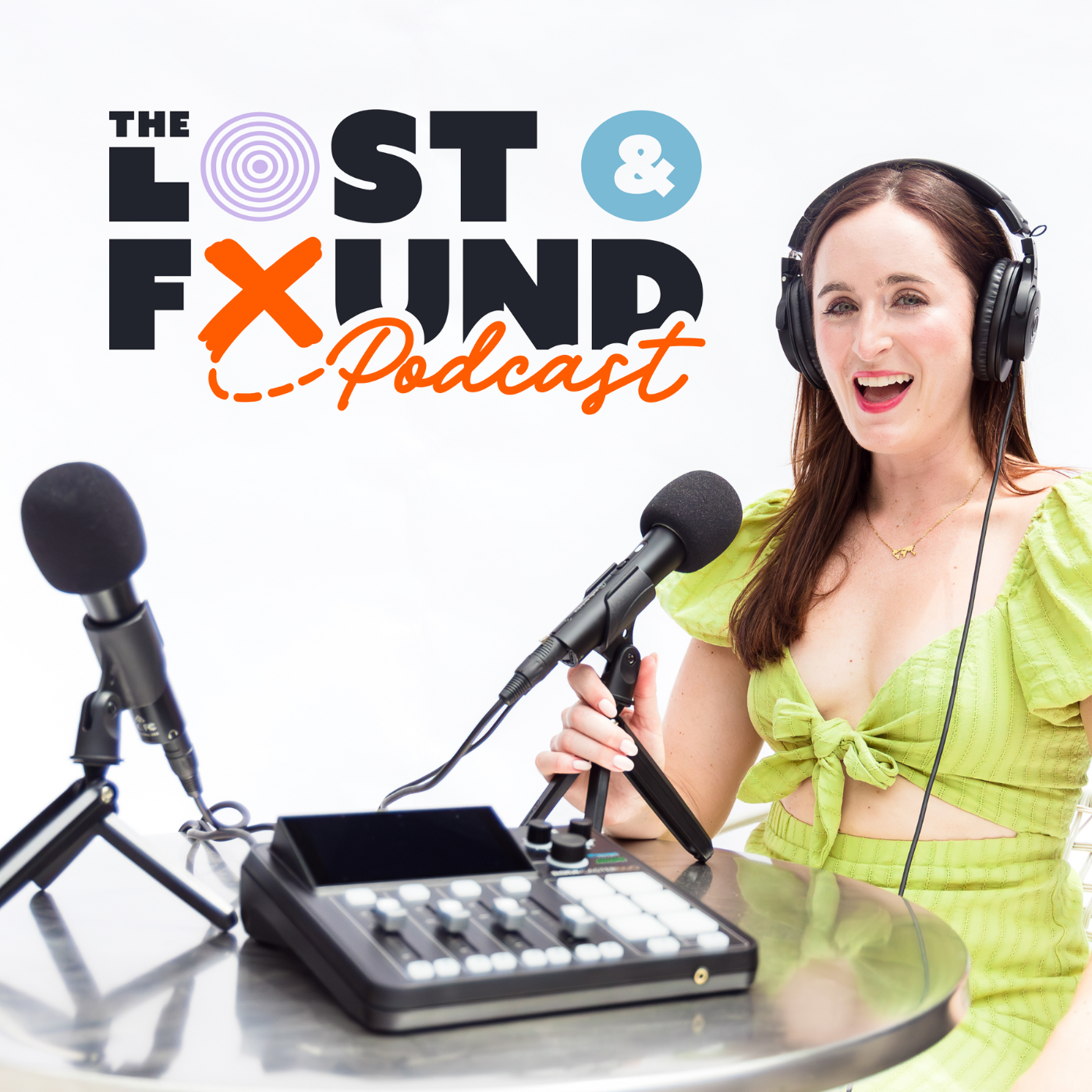
I recorded this episode in the same sweatsuit I’d been wearing for a week straight. No makeup. No plan. No brilliant insight I was dying to share with the world.
I hit record because I ran out of reasons not to.
That’s not the origin story anyone puts in their content strategy. But it’s the truth about Episode 121, and honestly, it’s the truth about a lot of this year so far. The first four months of 2026 hit me in a way I didn’t see coming — not in a dramatic, everything-collapses kind of way, but in that slow, grinding, quietly demoralizing way that’s somehow harder to explain. The kind of burnout that doesn’t look like burnout from the outside. The kind where you’re still functioning, still showing up for your actual responsibilities, still answering emails, going about your day and taking care of the people who need you. You just stop being able to do the thing that was supposed to matter most.
For me, that “thing” is this show.
When Your Passion Project Becomes the Thing You’re Avoiding
Here’s what creative burnout actually feels like from the inside, at least for me: it’s not that you stop caring. It’s that caring starts to hurt.
Every time I thought about getting back on the mic this year, something in my chest seized up. Not because I didn’t have anything to say — I have notebooks full of episode ideas, voice memos, fragments of conversations I want to have. It was because getting on the mic meant confronting the gap between what I’d imagined this would look like by now and what it actually looks like. And that gap has felt, at various points this year, completely insurmountable.
The Comparison Spiral is a Data Problem
I’ve spent a lot of time watching other creators from the outside — the ones with the matching content calendars and the perfectly timed LinkedIn posts and the Substack newsletters that go out like clockwork every week — and doing that specific kind of damage to myself where you start to wonder what they know that you don’t. What they figured out that you haven’t. Whether you’re just fundamentally not built for this.
The rational part of my brain knows exactly what’s happening when I go down that spiral. I spent years training that part of my brain — in an intelligence career that required me to be precise about the difference between what I know, what I can infer, and what I’m projecting. I know that what I’m seeing on the surface of someone else’s content doesn’t tell me anything real about what’s holding it up on the back end. I know comparison is a data problem, not a self-worth problem.
And yet. Here I am. Same sweatsuit. Fifth day in a row.
This Is What the Messy Middle Looks Like in Real Time
There’s a concept I keep coming back to on this show, and it’s the one that best describes where I’ve been living for most of this year: the messy middle.
The messy middle is that phase of any serious life pivot where you’ve already made the decision, already stepped off the ledge, already told people what you’re doing — but the new thing hasn’t fully materialized yet, and the old thing isn’t there to catch you anymore. You’re in the in-between. The forest. The part where you chose this path on purpose, but the path has mudslides and wild animals and days where it looks suspiciously like the Hunger Games.
What Nobody Tells You About Living in the In-Between
What nobody tells you about the messy middle is that it doesn’t always feel like forward motion. It often feels like failure. It feels like everyone around you is sprinting toward their version of their future while you’re standing in your kitchen at 11pm wondering if you made the whole thing up. It feels like you should be further along. It feels, if you’re a certain kind of person — and I am absolutely that kind of person — like you need to justify why you’re not.
It feels like everyone around you is sprinting toward their version of their future while you’re standing in your kitchen at 11pm wondering if you made the whole thing up.
This is something I see in a lot of the millennials who find their way to this show. We grew up being told that if you worked hard and stayed focused and built the right credentials, the path would reveal itself. And then a lot of us did exactly that, and the path revealed itself, and it turned out to be the wrong path — or a path that only looked right from the outside, or a path that we’d outgrown by the time we arrived at it. And now we’re in our thirties, trying to rebuild an identity around something we actually care about, while still paying rent and showing up for our families and pretending we have it more together than we do.
That’s the Millennial Identity Crisis in its truest form. Not a midlife crisis. Not a gap year. A slow, sustained reckoning with the fact that the self you built doesn’t fit anymore, and the new self is still under construction, and there is no timeline for when that construction will be complete.
I know this because I’ve been living it. And I know it because the people who listen to this show are living it too.
The Year That Got in the Way
I want to be honest about what this year has actually contained, because I think context matters and I think too many people carry their overwhelm in silence while pretending they’re just “a little behind.”
My grandmother has been sick. The kind of sick that reshapes your entire family’s schedule, emotional bandwidth, and capacity for anything beyond the essentials. We spent months managing her care, eventually getting her into an assisted living facility, and navigating all of the grief and logistics and love that comes with watching someone you love need more help than you can provide yourself. That doesn’t leave a lot of room for podcast production.
On top of that, I’ve been preparing for a major life change — I’m moving to Tampa, Florida, which is something I’ve been wanting to do for a long time and am genuinely excited about, even as it’s currently causing me a specific brand of logistical anxiety that has absolutely obliterated my creative drive. Packing. Lease stuff. The particular chaos of dismantling a life in one city and rebuilding it somewhere else. All of this is happening while I’m working a full-time job, caring for my grandmother in my parents’ absence, and trying to maintain some version of a podcasting practice with zero systems in place and a budget that currently does not include being able to hire help.
So yeah. January, February, March, early April. A lot happened. The show went quiet. And the longer it went quiet, the harder it became to justify breaking the silence — because by that point, the silence had started to feel like evidence of something. Like maybe I wasn’t cut out for this. Like maybe the gap between who I’m trying to become and who I currently am is just too wide.
That thought spiral? That’s the burnout talking. And recognizing it doesn’t always make it quieter.
Showing Up Anyway, Even When It Doesn’t Feel Like Enough
Here’s the thing I said out loud in this episode that I need to also say here, in writing, where I can’t immediately walk it back:
I don’t have to wait until I’m ready.
I’ve been sitting on that one for months, and I still don’t fully believe it, but I know it’s true. Clarity comes from action, not the other way around. Repetition removes doubt. You do not need to feel prepared, inspired, or particularly together to show up for the thing that matters to you. You just need to show up.
That’s what this episode was. That’s what this blog post is. Not a polished reflection on creative burnout from someone who’s gotten to the other side of it. A dispatch from the middle, written by someone who is still very much in it, still figuring out the systems and the schedule and the sustainable rhythm, still learning how to take her own advice.
If you’re in a version of this right now — carrying a passion project in the margins of a life that’s already asking everything of you, watching the gap between your vision and your reality and wondering if that gap says something permanent about you — I want you to know that it doesn’t. The messy middle is not a verdict. It’s a phase. And the only way out of it is through.
You can listen to Episode 121 wherever you get your podcasts. I hope in my awkward honesty you’re able to find the courage to keep going, keep showing up.
Quick Answers
What is creative burnout and how is it different from regular burnout?
Creative burnout is a specific form of exhaustion that affects people who pour personal meaning into their work — artists, writers, podcasters, entrepreneurs, and anyone building something in their own name. Unlike standard job burnout, creative burnout often comes with an added layer of identity threat: because you chose this, because it matters to you, struggling with it can feel like evidence that you’re not supposed to be doing it. It isn’t. It’s a signal that your output has exceeded your recovery, and it’s more common among purpose-driven millennial creators than most people admit out loud.
What is the “messy middle” of a life pivot?
The messy middle is the phase of a major life or career transition where you’ve already committed to a new direction but haven’t yet arrived at the outcome you’re working toward. It’s characterized by uncertainty, comparison, inconsistent motivation, and the particular discomfort of being in-between identities. For millennials navigating career reinvention, the messy middle can last months or even years — and it often looks, from the inside, like failure even when it isn’t.
Why do so many millennials experience an identity crisis in their 30s?
Many millennials built their early adult identities around specific career paths, credentials, or external definitions of success — and then reached those milestones only to find they didn’t deliver the clarity or fulfillment they expected. The result is a generation-wide reckoning that’s less like a traditional midlife crisis and more like a delayed identity construction: figuring out who you actually are when the person you were trained to become no longer fits. This is what Amanda Powers calls the Millennial Identity Crisis, and it’s the core of what The Lost & Found Podcast is built around.
How do you keep going when burnout makes everything feel pointless?
Honestly? Sometimes you don’t — and that’s not a failure, that’s a boundary. But when you’re ready to re-engage, the research and the lived experience point to the same place: small, consistent action before you feel ready. Clarity comes from doing, not from waiting until doing feels easy. That might mean a five-minute voice memo instead of a full episode. A paragraph instead of a post. Showing up imperfectly instead of not showing up at all. The goal isn’t momentum. The goal is contact with the thing you care about, however briefly, until the caring starts to feel like fuel again instead of pressure.
Where can I listen to The Lost & Found Podcast?
You can find The Lost & Found Podcast with Amanda Powers on Spotify, Apple Podcasts, YouTube, iHeartRadio, Amazon Music, and anywhere else you get your shows. Don’t forget to leave a review or 5 Stars and subscribe for weekly content about identity, healing, purpose, and becoming your future self.
Want to share your story or question for an upcoming Wanderer Wisdom Episode? Email me at hello@podcastforthelost.com or fill out the Contact Form.
Connect with Amanda:
- Website: http://www.podcastforthelost.com
- Instagram: @podcast.for.the.lost & @amanda.k.powers
- TikTok: @podcast.for.the.lost
- YouTube: @podcastforthelost
- Substack: podcastforthelost.substack.com
Discounts & Affiliate Support Links:
- ShopMy → Sneak peak into my chart for all my favorite tech, tools, and small luxuries that get me through the reinvention journey.
- Momentum Shake → Free Variety Pack
- IM8 Health → Code POWERS
- Twenty2 Nutrition → 5% Off
- PTULA → $10 Off
- Oner Active → $10 Off
- MONDAY Swimwear → 20% Off
- U BEAUTY → $25 Off
- Timeline → 20% Off (Code POWERS)
- Fusionary Formulas → 15% Off (Code LOST15)
Map
Wanderer's
The
Sign Up
Stay Updated
A purpose-driven, emotionally grounded creator who helps people feel seen and empowered as they navigate life’s most uncertain and transformative moments.
Hi, I'm Amanda!
Sharing wisdom, one story at a time.
Design by Sagewell
Privacy Policy |
| Terms of Use |
© 2023–2025 Lost and Found Productions
A storytelling community bridging the gap between who you are & who you’re becoming.
Follow Along
About Us