
Map
Wanderer's
The
Follow Along
Sign Up
Stay Updated
A purpose-driven, emotionally grounded creator who helps people feel seen and empowered as they navigate life’s most uncertain and transformative moments.

Hi, I'm Amanda!
Sharing wisdom, one story at a time.
Why Life After Treatment Feels So Hard (and What to Do About It)
There’s a part of growing up that almost no one prepares you for:
You do the hard thing.
You go to therapy. You go to rehab. You go to a program.
You “work on yourself.”
And then one day… you come home.
Same bedroom.
Same small town.
Same friends’ Instagram stories.
On paper, you’re “better.”
Inside, you feel more lost than ever.
That in-between space — the part after the treatment, after the crisis, after the big decision — is where a lot of my listeners live. It’s where I’ve lived, too.
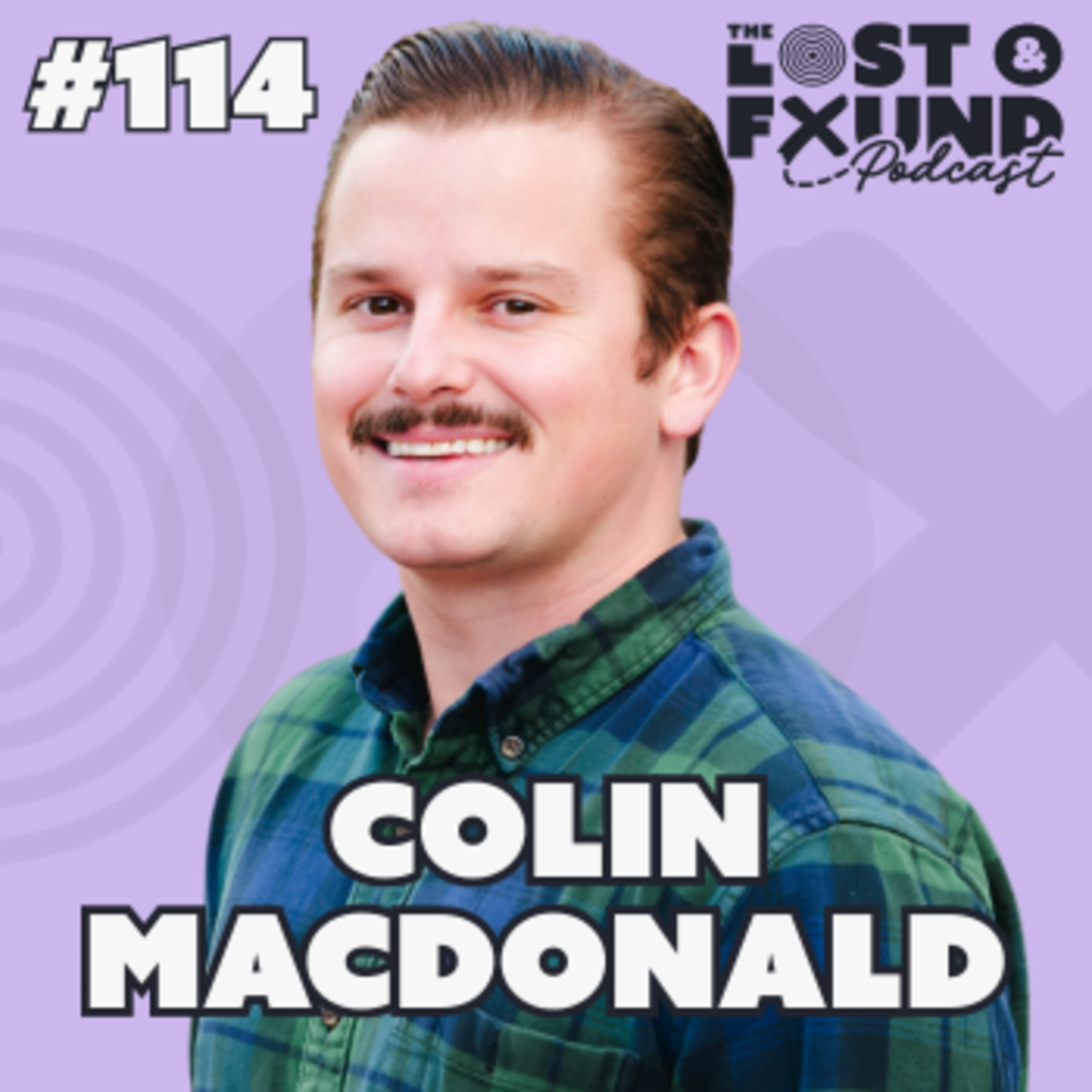
It’s also where this week’s guest, Colin MacDonald, co-founder of NOT Therapy, has built his entire life’s work.
Meet Colin: The Kid Who Got Sent Away
As a teenager, Colin was “that kid.”
The one bouncing between psych wards, wilderness programs in the Utah desert, and a therapeutic boarding school he once literally ran away from on foot.
He wasn’t a case study. He was a scared kid, far from home, trying to make sense of one brutal story looping in his head:
“My parents sent me away. That must mean I’m broken. That must mean they don’t want me.”
Years later, he can see the truth more clearly — that his parents were terrified, out of tools, and doing the best they could with what they had.
But in the moment? All he felt was abandonment.
Fast forward. He makes it through. He goes to college. He claws his way into a job with the Seattle Mariners in Major League Baseball — not because his path was linear or polished, but because he decided to put his mind to one thing and keep knocking until a door opened.
That job took him from “troubled teen” to young professional. Then a move to Spain took him somewhere deeper: into work with teens who looked a lot like his younger self.
All of that — the pain, the programs, the ballpark job, the years in Spain — eventually led him to co-found NOT Therapy, a next-gen model of support for 16–29-year-olds who have “gotten help”… and still don’t know how to live their actual lives.
The Difficulty of Bridging the Gap Between Treatment and Home
One of the most powerful parts of my conversation with Colin was how normal he made this post-treatment chaos sound.
He said something that really stuck with me: most of the young people he works with aren’t lacking insight. They can name their feelings. They know the diagnoses. They’ve heard all the buzzwords.
The problem isn’t awareness.
The problem is translation.
How do you translate “I’m anxious and ashamed” into “Here’s what I’m going to do with my next 24 hours”?
For teens and twenty-somethings coming home from treatment, a few things collide at once:
-
The structure disappears: In a program, every hour is scripted. At home, no one is waking you up, telling you when to eat, or making sure you show up.
-
The spotlight stays on: Everyone is watching you. Parents, siblings, extended family. You can feel their fear through the way they ask, “Are you okay?” for the tenth time.
-
The story in your head turns cruel: One missed class, one bad day, one shutdown… and the narrative becomes: “See? I’m still a screw-up. Nothing has changed.”
-
No one knows whose life it is now: Are you in charge? Are your parents in charge? Is your therapist in charge? It’s confusing — and that confusion often turns into resentment on all sides.
Colin’s work lives exactly there — in the messy handoff between “you are discharged” and “you are actually living.”
From Emotional Fluency to Emotional Function
One line from our conversation felt like a thesis:
“You might know exactly what you feel… but no one ever taught you how to live with it.”
That’s the gap NOT Therapy tries to fill. Instead of one session a week with no accountability in between, their model is built on:
-
Seven-day support and real-world reps: Not just “how did your week go?” but “let’s plan your week and walk you through it.”
-
Mentors with lived experience: People who know what it’s like to be sent away, to feel like the “problem kid,” to come home and not recognize yourself.
-
Structure that matches real life: Jobs, school, relationships, chores, social anxiety, late-night spirals — not just worksheets in an office.
And at the center of all of that is a mindset that sounds simple but is deeply countercultural in a perfection-obsessed world:
A bad day is just a bad day. It doesn’t have to become a bad week, a bad month, or a bad life.
For Colin’s clients, this isn’t motivational fluff. It’s a lifeline.
Because when you stop turning every bad day into a moral indictment of who you are, you free up just enough energy to try again tomorrow.
If You’re Feeling Stuck or Mid-Transformation
You might be reading this and thinking:
“I’ve never been to treatment. Does this still apply to me?”
Honestly? Yes. Completely.
Maybe your “treatment” was a job you sacrificed everything for, only to realize it was killing you.
Maybe it was a relationship you built your entire identity around.
Maybe it was a city, a degree, a church, a dream that no longer fits… and you’re trying to figure out who you are without it.
The details are different, but the nervous system doesn’t care.
Losing a version of yourself — or being told you have to change — feels like danger. Your brain does what it always does in danger: it panics, catastrophizes, and tries to either control everything or shut everything down.
That’s why Colin’s story matters, even if you’ve never set foot in an intensive treatment program:
-
He shows that a life can be deeply nonlinear and still land in a place of purpose.
-
He shows that you don’t have to wait until you “deserve it” to go after the job, the new city, or the work that lights you up.
-
He shows that your worst chapters can become data, not destiny — information you use to guide you, rather than a verdict against you.
If you’re in the middle of a transformation right now — trying to pivot into a better version of yourself, trying to find your purpose after everything fell apart — this is the kind of story you have been looking for.
Not because it offers a five-step blueprint to a perfect life, but because it reminds you: it’s okay for your map to look messy. It’s okay if you’re not “fixed.” It’s okay if you’re still figuring it out.
A Note for Parents Reading This
I know some of you aren’t the “Colins” in this story — you’re the parents.
You might have sent your kid to a program. You might be considering it. You might be sitting in the quiet guilt of decisions you made when you were scared and out of options.
Colin’s perspective as both the kid and the adult is rare and important. He doesn’t minimize the pain of being sent away. He also doesn’t vilify parents who were trying to keep their kid alive.
If you listen to nothing else, listen to the way he talks about repair: the small conversations, the shifted expectations, the move from “director” to “guide.” The way he invites parents to safely take a step back without disappearing.
You are allowed to forgive your past self for not knowing what you know now. You’re also allowed to show up differently for yourself and your kid(s) going forward.
Why I Wanted You to Hear This Story
The mission behind The Lost & Found Podcast has always been to bridge the gap between who you are right now and the version of you that feels more grounded, more honest, and more alive.
Colin embodies that bridge.
He is not speaking from a pedestal. He is speaking from the middle — from the after, the almost, the still-in-progress.
If you’ve been feeling stuck, behind, ashamed of how long it’s taking you to “get your life together”…
If you’ve been trying to reinvent yourself and keep running into the same walls…
If you love someone who is lost and you don’t know how to reach them…
I think this episode will give you both language and hope.
Listen to the Full Conversation
🎧 Episode 114 – Why Life After Treatment Feels So Hard (and What to Do About It) with Colin MacDonald, co-founder of NOT Therapy
You can listen on:
-
Spotify & Apple Podcasts: The Lost & Found Podcast with Amanda Powers
-
YouTube: The Lost & Found Podcast (@podcastforthelost)
If this story lands with you, I’d love for you to:
-
Hit subscribe on YouTube, Spotify, or Apple Podcasts so you don’t miss future episodes.
-
Share this episode with a friend, parent, or twenty-something who might see themselves in Colin’s story.
-
Reply or comment with where you are in your own “after treatment / after everything” chapter. I read them all.
Wherever you are on your journey right now — you’re not behind. You’re just between versions of yourself. And that’s allowed.
CONNECT WITH COLIN:
- Instagram – @coach_colinmac
- Not Therapy – @not.therapy.coaching
- Website – https://www.nottherapy.me/
CONNECT WITH AMANDA:
Don’t forget to share this show with a friend and subscribe for weekly conversations on identity, healing, purpose, and becoming your future self.
Want to share your story or ask a question for an upcoming Wanderer Wisdom episode? Email us at hello@podcastforthelost.com
Instagram: @podcast.for.the.lost | @amanda.k.powers
TikTok: @podcast.for.the.lost
YouTube: @podcastforthelost
Substack: podcastforthelost.substack.com
AFFILIATE LINKS:
IM8 Health → Code POWERS for 8% Off
Momentum Shake → Free Welcome Kit & Travel Packs
time__line – 20% Off (code POWERS)
Map
Wanderer's
The
Sign Up
Stay Updated
A purpose-driven, emotionally grounded creator who helps people feel seen and empowered as they navigate life’s most uncertain and transformative moments.
Hi, I'm Amanda!
Sharing wisdom, one story at a time.
Design by Sagewell
Privacy Policy |
| Terms of Use |
© 2023–2025 Lost and Found Productions
A storytelling community bridging the gap between who you are & who you’re becoming.
Follow Along
About Us